

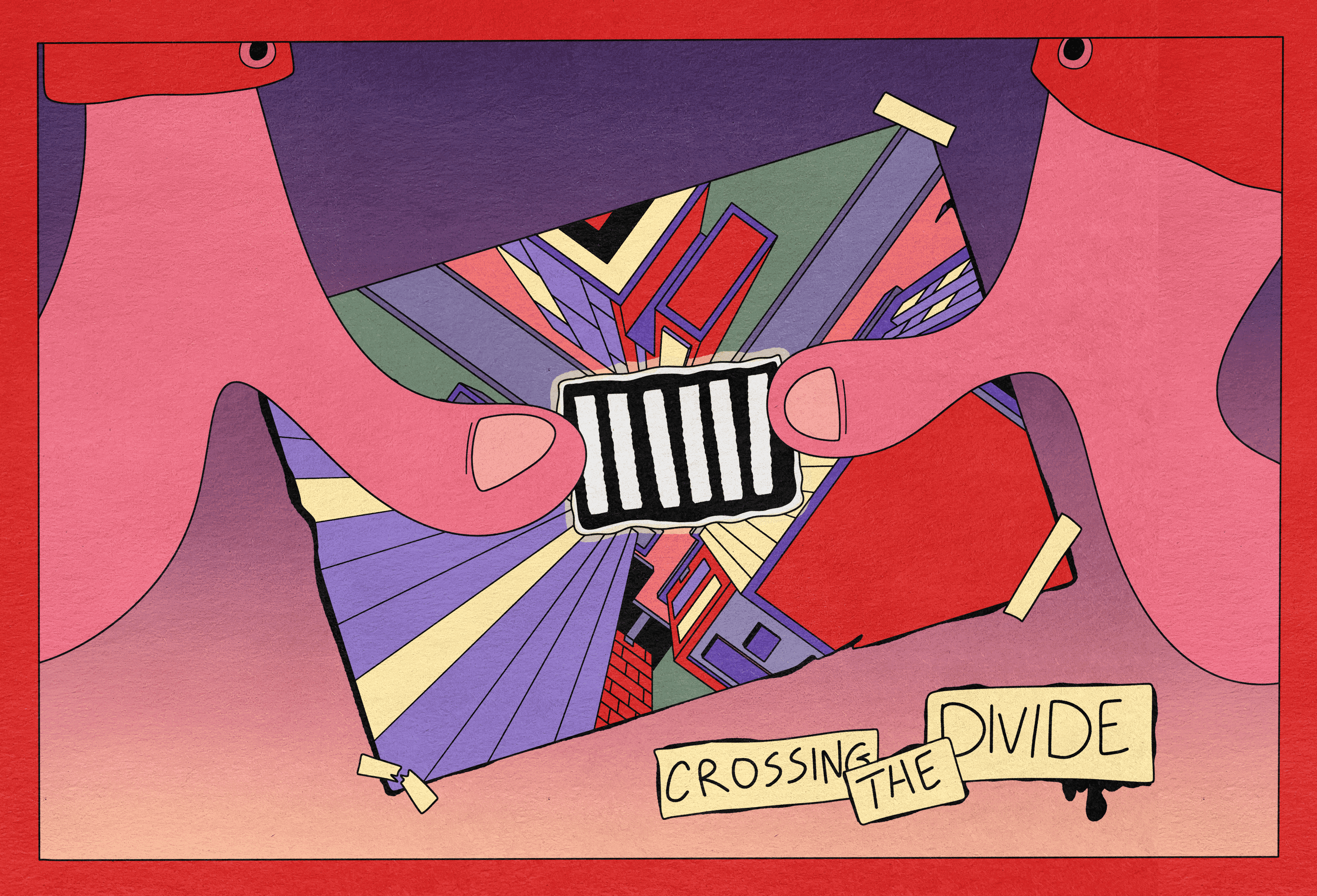
Crossing the Divide
Published in ATÖLYE Insights · 7 min read · July 23, 2025
A Stroll Through Cities, Cars, and the Suffering That Is Design
by Güray Oskay, Director of ATÖLYE Architecture
A Dinner Odyssey
Another business trip, another late evening check-in to the hotel. I haven’t eaten all day; I toss my bag aside, and from my 24th-floor window, I spot the shimmering lights of a restaurant on the other side of the street. The street in question, however, stretches out with four lanes in each direction, like a misplaced highway that someone dropped right in the middle of downtown. But alas, no pedestrian crossing in sight.
So, down to the ground floor I go, scanning for any sign of a crosswalk. Nothing. I whip out my phone and ask Google Maps for directions – to cross the street, mind you! And what does it suggest? A delightful 2-kilometer stroll in one direction, a chance to cross, and then a 2-kilometer walk back. Only to repeat the journey after dinner, during which I’d aged emotionally by at least six months. It’s like being stuck in a Kafkaesque, urban-design comedy.
And this little urban farce wasn’t an isolated incident – it’s a symptom. A symptom of a larger, more asphalt-scented ailment that affects cities just about everywhere.
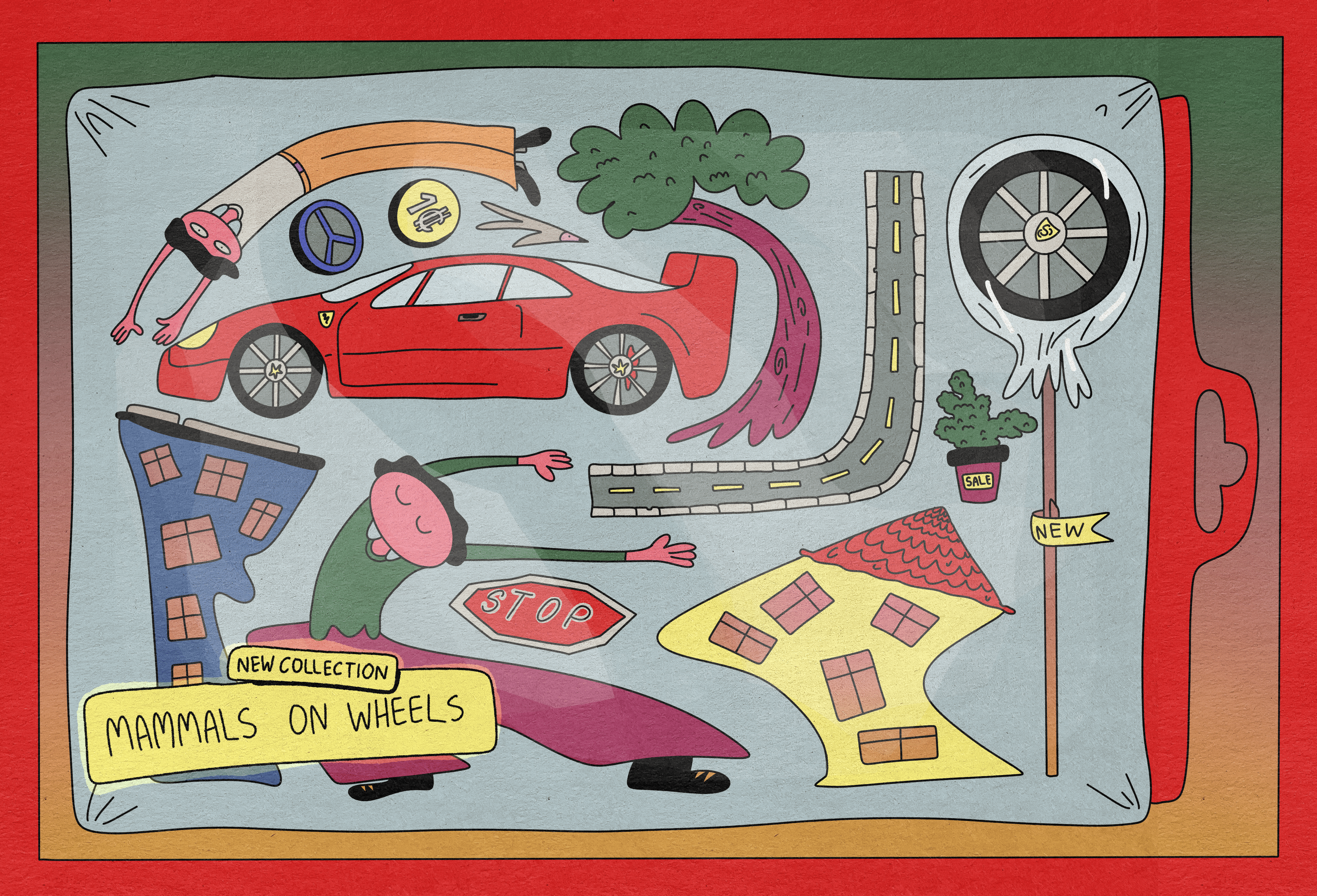
Cities for Cars (and Other Mammals on Wheels)
At some point in the 20th century, we gave cities to cars. Not literally, of course – there was no ceremonial key handed over to the first Cadillac. But in practice, everything began to shift in their favor. Roads widened. Sidewalks shrank. Public transportation stalled. We always advocate cities for people, but somewhere along the way, we missed the memo. No, cities are for cars! Cars are the real VIPs. They get the lanes, the shade, the attention. Meanwhile, we pedestrians are out here dodging speeding SUVs like extras in a low-budget action film. The car became a symbol of freedom, while walking became a quaint hobby, like knitting.
In the Middle East – where I’m writing this rant of an article – I even have friends who are practically glued to their cars. It’s like they’re in a committed relationship. I’m afraid the next stage in human evolution might involve developing wheels! Imagine that – rolling into the future, quite literally. It might sound funny, but at this rate, we’re just one step away from sprouting hubcaps.
So, how did we end up here – rolling through cities built more like racetracks than neighborhoods?
Public Transport and Other Utopian Concepts
Whenever we talk about reversing car dependency, someone inevitably says it: “We just need to make public transport better.” It’s the silver bullet. Get people out of their cars and into buses, metros, and trams. Make it clean, safe, efficient, and voilà – problem solved.
If only it were that easy. I believe there’s more to the problem. So inevitably, the solution is equally complex.
Because here’s the thing: people’s relationship with public transport is not just about convenience, quality, or frequency. It’s also about the cohesion of the community. In places where the social fabric is relatively tight – where there’s a general sense of equity and mutual respect – public transport is embraced by all. It’s not seen as a fallback option, but as a smart, collective choice.
But in regions marked by stark income inequality, things get trickier. Public transportation becomes stratified. The more affluent often retreat into private cars – not just for comfort, but to insulate themselves from the perceived chaos of shared space. It’s almost like an unspoken rule: protect your bubble, even on the road. One suspects that if teleportation were invented tomorrow, people would still opt for private pods equipped with cup holders and Bluetooth.
Which is why car dependency isn’t just an infrastructure issue. It’s a reflection of how fragmented or connected a society is. And this is where policy-making and participatory urban design become essential – not just for improving transportation systems, but for re-knitting the city’s social fabric. Because creating inclusive, accessible cities means more than just laying down tracks – it means building trust in the shared experience of movement.
That trust begins not just with transportation – but with public life itself.
Median Is the Message: The Great In-Between
There’s a great short story by Turkish writer Pelin Buzluk¹ called Refüj (Turkish for “median”), where the protagonist tries to cross the street but ends up stranded on the median. Eventually, she discovers a community of others who have made their lives there, stuck in the in-between. They just can’t cross over to the other side. Unmistakably Buñuel-like – absurd, unsettling, and eerily familiar – with a touch of Orwell in its quiet, class-bound despair, the story isn’t about urban mobility – it’s about social isolation.
Refüj may be fiction, but the metaphor isn’t subtle. We are all, in some form, stranded in the median – caught between the idea of walkable, inclusive cities and the everyday reality of navigating cityscapes built for machines.
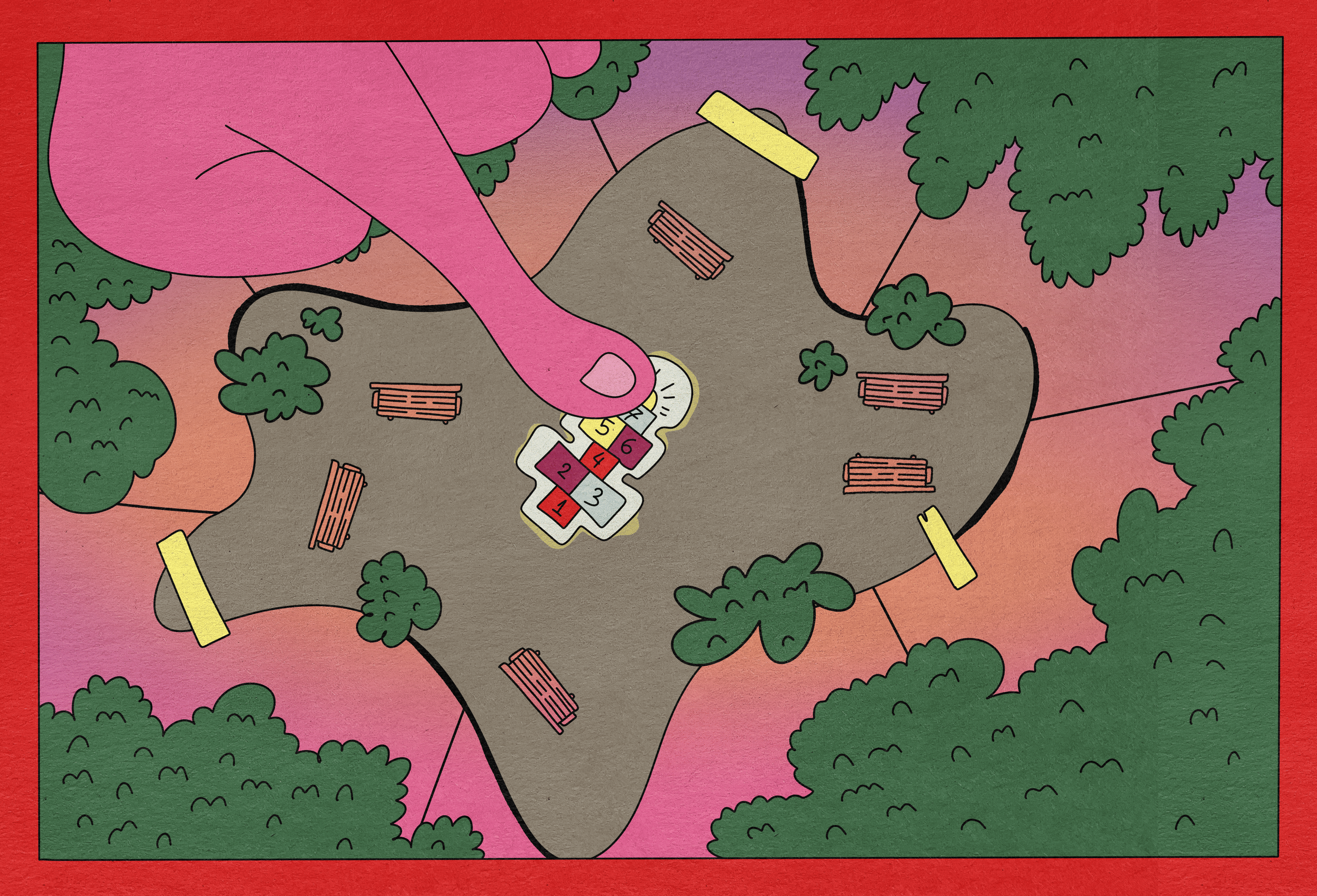
What We Really Need Is a Bench, Maybe?
If car dependency reflects a fragmented society, then what’s the antidote?
We need places that stitch us back together. Not just transportation networks, but shared spaces. Parks. Plazas. Shaded benches where people from all walks of life might – by accident or design – end up sitting beside one another.
We don’t just need to move through the city. We need to dwell in it. And more importantly, dwell with one another. Because in cities where people never encounter difference – where they speed past each other in metal boxes – community doesn’t form.
Public space is where society rehearses being society. It’s where proximity breeds empathy, not suspicion. If we want to build cities that are less car-dependent, we need to make room – not just for walking and cycling, but for belonging.
And we’d like to believe that belonging can be designed for.
Not All Heroes Specify Street Furniture
If cities really are society’s rehearsal rooms, then someone has to care about the (not so) little things. The alignment of a shaded walkway that connects a school to a park. The decision to narrow a street so a plaza can breathe. The gentle slope of a shared path where bikes, strollers, and wheelchairs move together without conflict. The placement of a market square close enough to housing that you run into your neighbor while buying tomatoes. These kinds of spatial choices quietly shape the possibility of connection – or its absence.
These decisions aren’t always glamorous. They don’t trend. But they make cities livable, generous, and human.
Design doesn’t always begin with a commission. Often, it begins with noticing what’s missing. And offering a sketch of what could be there.
Because if better cities are ever going to exist, someone has to start drawing them – even when no one’s asked.
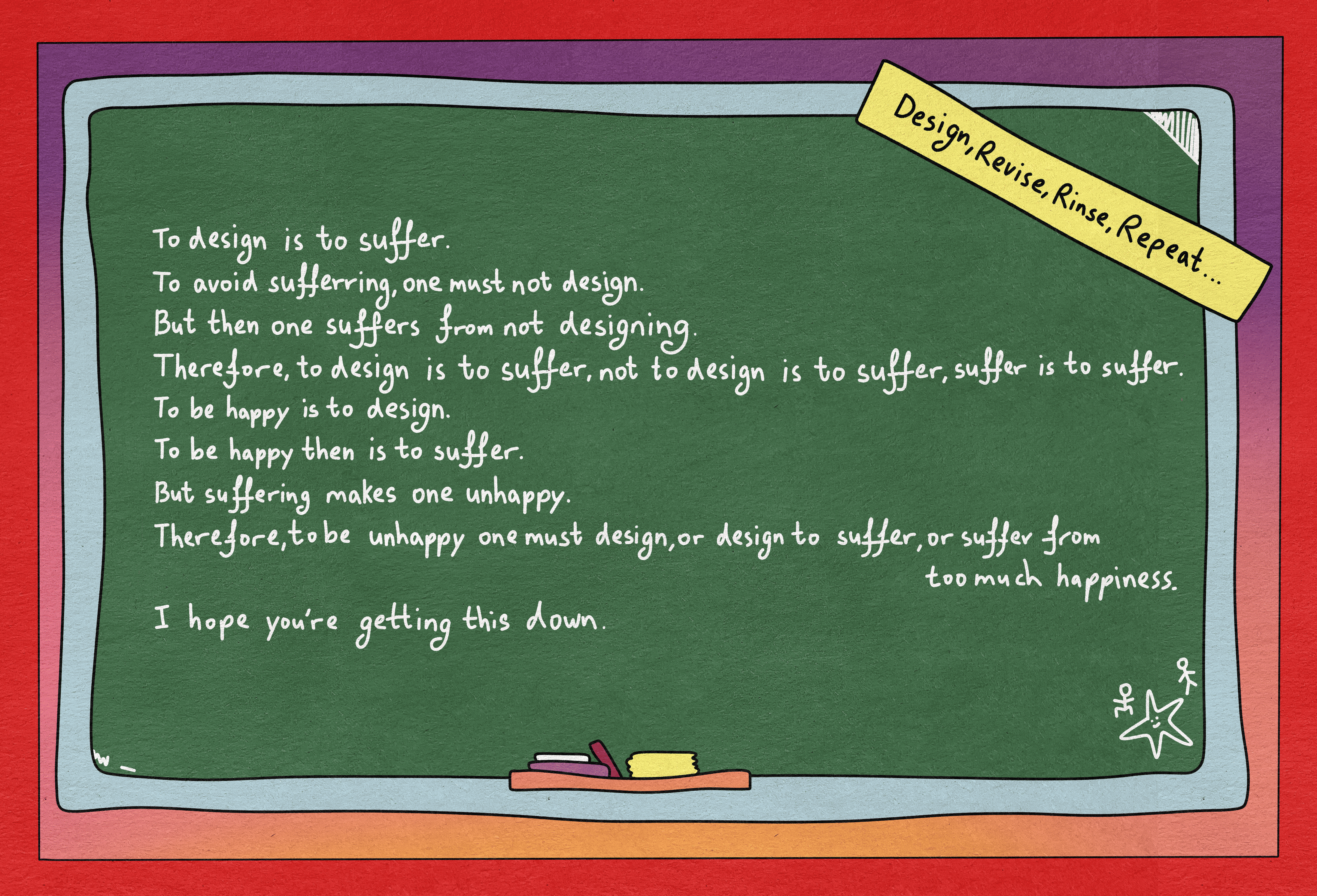
Design, Revise, Rinse, Repeat
This is what design often looks like: a mix of proposals, pop-ups, plans that don’t get funded, and sketches that get left behind. A mess of meetings and moments. A fight over a tree here, a ramp there. A drawing you redraw fifteen times because it might make someone’s daily walk just a little bit easier.
Most of it is invisible. Some of it sticks. And every once in a while, something modest turns out to be transformative.
It’s not always policy. It’s not always architecture. Sometimes it’s just persistence – choosing to keep offering ideas in a system that doesn’t always know what to do with them.
It’s not glamorous. But it’s worth it. And if I’m remembering this right, someone once said something like:
𝘛𝘰 𝘥𝘦𝘴𝘪𝘨𝘯 𝘪𝘴 𝘵𝘰 𝘴𝘶𝘧𝘧𝘦𝘳.
𝘛𝘰 𝘢𝘷𝘰𝘪𝘥 𝘴𝘶𝘧𝘧𝘦𝘳𝘪𝘯𝘨, 𝘰𝘯𝘦 𝘮𝘶𝘴𝘵 𝘯𝘰𝘵 𝘥𝘦𝘴𝘪𝘨𝘯.
𝘉𝘶𝘵 𝘵𝘩𝘦𝘯 𝘰𝘯𝘦 𝘴𝘶𝘧𝘧𝘦𝘳𝘴 𝘧𝘳𝘰𝘮 𝘯𝘰𝘵 𝘥𝘦𝘴𝘪𝘨𝘯𝘪𝘯𝘨.
𝘛𝘩𝘦𝘳𝘦𝘧𝘰𝘳𝘦, 𝘵𝘰 𝘥𝘦𝘴𝘪𝘨𝘯 𝘪𝘴 𝘵𝘰 𝘴𝘶𝘧𝘧𝘦𝘳, 𝘯𝘰𝘵 𝘵𝘰 𝘥𝘦𝘴𝘪𝘨𝘯 𝘪𝘴 𝘵𝘰 𝘴𝘶𝘧𝘧𝘦𝘳, 𝘵𝘰 𝘴𝘶𝘧𝘧𝘦𝘳 𝘪𝘴 𝘵𝘰 𝘴𝘶𝘧𝘧𝘦𝘳.
𝘛𝘰 𝘣𝘦 𝘩𝘢𝘱𝘱𝘺 𝘪𝘴 𝘵𝘰 𝘥𝘦𝘴𝘪𝘨𝘯.
𝘛𝘰 𝘣𝘦 𝘩𝘢𝘱𝘱𝘺 𝘵𝘩𝘦𝘯 𝘪𝘴 𝘵𝘰 𝘴𝘶𝘧𝘧𝘦𝘳.
𝘉𝘶𝘵 𝘴𝘶𝘧𝘧𝘦𝘳𝘪𝘯𝘨 𝘮𝘢𝘬𝘦𝘴 𝘰𝘯𝘦 𝘶𝘯𝘩𝘢𝘱𝘱𝘺.
𝘛𝘩𝘦𝘳𝘦𝘧𝘰𝘳𝘦, 𝘵𝘰 𝘣𝘦 𝘶𝘯𝘩𝘢𝘱𝘱𝘺 𝘰𝘯𝘦 𝘮𝘶𝘴𝘵 𝘥𝘦𝘴𝘪𝘨𝘯, 𝘰𝘳 𝘥𝘦𝘴𝘪𝘨𝘯 𝘵𝘰 𝘴𝘶𝘧𝘧𝘦𝘳, 𝘰𝘳 𝘴𝘶𝘧𝘧𝘦𝘳 𝘧𝘳𝘰𝘮 𝘵𝘰𝘰 𝘮𝘶𝘤𝘩 𝘩𝘢𝘱𝘱𝘪𝘯𝘦𝘴𝘴.
𝘐 𝘩𝘰𝘱𝘦 𝘺𝘰𝘶’𝘳𝘦 𝘨𝘦𝘵𝘵𝘪𝘯𝘨 𝘵𝘩𝘪𝘴 𝘥𝘰𝘸𝘯.
And yet, the only thing harder than crossing the street is changing the system that built it.
Now if you’ll excuse me, I have a 2-kilometer walk ahead of me. There’s a restaurant across the street I’ve been meaning to try.
At ATÖLYE, we’re passionate about creating spaces for collaboration and innovation. If this resonates with you, don’t hesitate to reach out to us and start a conversation and explore how we can shape the future together.
¹ Pelin Buzluk, Deli Bal (Istanbul: Can Yayınları, 2014).